Sunday, December 11, 2016

Are you the one who is to come?

Third Sunday of Advent, Year A 
December 11, 2016
Richard Smith
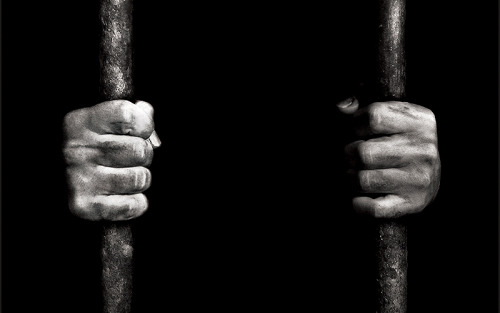

When John the Baptist had announced the coming of God’s kingdom and proclaimed Jesus as God’s anointed, he expected the world to change.

But nothing seemed to change; in fact, things had gotten worse. Rome continued its oppressive occupation of their lands, and religious leaders continued their policies of appeasement while getting rich off of their own people. Crowds no longer listened to John's powerful call for change at the Jordan River. Now, John was in prison, and, in fact, whether he knew it or not, on death row.

So, from the brink of despair for himself and the people he loved, John sends his disciple to ask Jesus, a question: “Are you the one who is to come, or are we to wait for another?”

We had desperately hoped you might be, but now we’re not so sure.

Words of anxiety and quiet desperation…

Words echoed in our own hearts and our own world today.

I recall talking to an old woman in a nursing home years ago. She knew her death was not far off. She said, “You know, I’ve been a believer all my life. Always had a deep faith in God. But now my time is getting close, and, well, I just can’t help but wonder…”

Quiet desperation about the very meaning of her own life.

And the other night I was at a meeting in the neighborhood. The mother of Mario Woods was there. Mario was the young man killed by police a year ago in the Bayview. At that meeting, his mother, with tears in her eyes, was pleading with the District Attorney for justice in her son’s case. She told him,
There are days I say, "I had a son. I had a baby son." I have to say his name out loud. He used to be here. And he mattered.
There are so many mothers you have to pray for, so many sleepless nights, so many dragging themselves out of bed.
Quiet desperation.

Just after the long night of the last election, the rapper Macklemore wrote these lyrics:
Mad world, mad world, that's what the TV said
Imagine tryna keep your head
While your daughter sleeps in bed
And when she wakes up, will the world be the same?
Will my girl be afraid in the home of the brave?
See I hope, I hope, that it's gon' be alright
But what a hell of a night.
Quiet desperation.

And when Jesus hears John’s question of quiet desperation--“Are you the one who is to come, or are we to wait for another?”--he does not answer him directly. Instead, he points to what he’s doing, as if to say, "Here's what I do. You can decide for yourself whether I am the one you're waiting for."

What Jesus is doing is restoring things that were missing.
The blind receive their sight, the lame walk, the lepers are cleansed, the deaf hear, the dead are raised, and the poor have good news brought to them.
What he’s doing in his own ministry is playing out what the prophet Isaiah had dreamed in today’s first reading. It’s a dream of restoration: That which was missing is found: sight, mobility, hearing, life, the sparkle in one’s eyes.

It’s a longing deep inside our fragile human hearts--this desire to be restored to wholeness.

Because in this world we lose things: sometimes we lose our car keys or cell phones, sometimes it’s a job or a dear friend; aging bodies can lose their looks and their lustiness; mothers can lose their sons.

And sometimes just to get along in the world we can lose parts of ourselves. The poet Robert Bly personally describes these lost parts of ourselves as “a long bag we drag behind us.”
When we were one or two years old we had what we might call a 360-degree personality...but one day we noticed that our parents didn’t like certain parts...They said things like: “Can’t you be still?” Or “It isn’t nice to try and kill your brother.” Behind us we have an invisible bag, and the part of us our parents don’t like, we, to keep our parents’ love, put in the bag. By the time we go to school our bag is quite large. Then our teachers have their say: “Good children don’t get angry over such little things.” So we take our anger and put it in the bag. By the time my brother and I were twelve in Madison, Wisconsin, we were known as “the nice Bly boys.” Our bags were already a mile long.
Of course, these lost parts of ourselves do not stay in the bag forever. Eventually they demand to be heard and integrated in a more life-giving way. The longing to be whole again runs very deep in us and must have its say.

This restored wholeness--whether the finding of lost keys or a lost son, or a society restored to its own best values after a divisive and corrupt election, or a self fully alive and at peace with itself--this wholeness, the ancient prophet tells us, is our future; it is our destiny, what God made us for.

This dream of restoration is what we are to hold onto in these Advent days.

And this future we dream of is already on the way. In fact, it already shapes how we are right now.

We know from psychologists how the past shapes our present. Past experiences, pleasures, traumas, even from the time we’re still in our mothers’ wombs, shape who we have become and how we understand and respond to our present moment.

But our present is shaped not only by our past but also by our future. The future we perceive shapes how we stand and what we do right now.

Here’s a metaphor. Pretend I’m about to toss you an orange. Imagine how you stand physically, how you hold your hands in order to catch it. Now imagine I’m tossing you a dish towel. How do you stand, how do you hold your hands to catch it? How about if I throw you a chair?

You get the point. The way we stand, our posture and what we do is shaped by what we see coming toward us.

Similarly, how we live our lives right now, what we do, how we spend our time and energy is shaped by the future we perceive coming toward us.

If, for example, you imagine with George Orwell that “the future is a boot stamping on a human face -- forever”, this will shape how you are in the present--perhaps causing you to cower, or defiantly clench your fist and your jaws, or anxiously hoard what little you have in a universe that you perceive to be brutal and cruel.

But if, with the ancient prophet and with Jesus, you imagine the future to be a world restored, where broken relationships are healed, where our fragmented selves and world are made whole again, then this vision will likewise shape how you are now.
  • If in the world to come there will be no more tears, then we wipe the tears from each other’s eyes now.
  • If in the world to come, there will be no more wars, no more violence, then we let the weapons fall from our hands now.
  • If in the world to come, everyone will be welcomed, with enough to eat, a safe place to sleep, then we resist the building of walls and the violence against people of color and of other religions, and we throw open our doors to welcome the homeless and immigrants, trans people and Muslims.
This prophetic dream of restoration has work for us to do right now. It asks us to resist going numb when the world within or beyond us is falling apart and fragmented.

In the height of despair, in the deepest darkness, this ancient prophetic dream calls us to open our hearts, our eyes, our hands, to engage the world when it breaks our hearts. This dream, passed to us from our spiritual ancestors and now part of our spiritual DNA, this dream goes with us, step by step, providing the sustenance we most need.

This is the dream that can, if we let it, carry us through these harsh, wintry Advent days.

Let me close with a poem by Jan Richardson.
So may we know
the hope
that is not just
for someday
but for this day—
here, now,
in this moment
that opens to us:

hope not made
of wishes
but of substance,

hope made of sinew
and muscle
and bone,

hope that has breath
and a beating heart,

hope that will not
keep quiet
and be polite,

hope that knows
how to holler
when it is called for,

hope that knows
how to sing
when there seems
little cause,

hope that raises us
from the dead—

not someday
but this day,
every day,
again and
again and
again.

Sunday, December 4, 2016

How The Light Gets In

Sara Warfield, 2nd Week of Advent
Episcopal Church of St. John the Evangelist December 4, 2016


I love Advent. After an almost interminable Ordinary Time, we suddenly but quietly, it seems to me, pull out the blues and purples, and we enter into the darkness. With intention. With quiet anticipation.

In this part of the world, Advent comes as we approach literally our shortest days of the year, and I know a lot of us have felt as though a different kind of darkness has descended since November 8 th . It feels like the beginning of a very long night indeed. I’ve been stumbling through these weeks, not sure how to find my bearings. Groping around, wondering how to move forward. I feel so lost. So like a child lost at the grocery store, I’ve just stopped, stayed in the same place, and watched for someone I recognize.

In stopping, though, I’ve started to notice something about this long night. In this long night, it’s hard to really see one another. When it’s dark, we can only make out the obvious features. We hear a Spanish accent, or an Evangelical quoting scripture from the King James Bible. We notice the woman in a hijab, or the man under a blanket on the sidewalk. We see black skin, or a red cap that reads Make America Great Again.

When it’s dark, we use this limited information instinctively to do one thing: to determine if that person is a threat. And I say that with no judgment. That’s just how we were built. The oldest part of our brain, the part of our brain that evolved first, just wants us to survive and so constantly scans the environment for threats. It’s sensitive. It’s reactive. It’s fight or flight. Like a wild animal.

There were some animals in our readings today. The prophet Isaiah imagines an ideal world, or in our tradition’s language, a kingdom come, where:
The wolf shall live with the lamb,
   the leopard shall lie down with the kid,
the calf and the lion and the fatling together,
   and a little child shall lead them.
The cow and the bear shall graze,
   their young shall lie down together;
   and the lion shall eat straw like the ox.
Isaiah lived in a time of a long night. His land was under attack. The Assyrians had become the dominant power in the region, wolves who posed a constant threat to Israel’s survival. Those who could fight had a weapon by their side. And for those who couldn’t fight, I imagine a sort of restless fear. The two options were aggression or suspicion. Everyone was afraid, lambs bunkered down, hoping somehow to withstand the stronger force.

But Isaiah imagines a different way of being. A kingdom to come where lambs can be lambs and wolves can be wolves, and they can live together in peace.

But as we sit in our own long night, we wonder, how? How is this possible? In all of our differences, in all of the ways we feel threatened by one another, in all of the ways we seek to dominate each other. How?

Most mornings, I listen to music on my bart ride to the city. I’ve been listening to a contemporary Advent song, a millennial hymn, you might say. The song, by The Brilliance, is called “May You Find a Light” and the verse that has stuck with me says:
There are weary travelers
Searching everywhere you go
Strangers who are searching
Longing deeply to be known
Who of us is not longing deeply to be known? Who of us has not sought out our tribe? People who look like us. Love like us. Create like us. Believe like us. We look for similarities, for affinities, points of connection to join us together in community. I think it’s why a lot of us are here this morning. These communities help us to feel like we are known, like we are seen, and they make us feel safe. We find our wolf groups, our lamb groups, our lion groups, our bear groups, our ox groups. And in those groups, we can rest. I’m glad we have these places to go.

I want you to love the lamb you are. The wolf you are. The bear you are. The ox you are. But becoming who we are, and loving who we are, only gets us part of the way to Isaiah’s vision of peace, or what we call the kingdom to come.

The one we wait for during this season of Advent calls us to widen our field of knowing, to expand who we see as our neighbors, who we deem worthy of our love and care. There is only one thing I know of that connects every single one of us. One thing that every one of us shares. We have all suffered. To have this flesh, this human experience, means to suffer.

Isn’t that the power of this season? God comes down to inhabit this flesh. This earth. This mess. Emmanuel, God with us, God inhabiting our brokenness. Through Jesus, God suffers with us. Through Jesus, we are known.

Most of you know that I spend my days serving as a street chaplain. I spend much of that time with the men and women who come for sacred sleep through the Gubbio Project, both here and at St. Boniface Catholic Church in the Tenderloin. Most of what I do is check in on folks. “How are you doing today?” When I’m here, I hang out in the courtyard and shoot the breeze with the regulars out there.

There’s one man I see most times I’m here. He’s always well dressed. He always smiles and gives me a hug and tells me that his favorite aunt’s name is Sara. I always ask him how he’s doing, and he always says he’s doing well. This past week, though, when I asked him how he’s doing, he looked down. I smelled alcohol on his breath, and he said with a sad smile, “they took me to detox last night, but…” and he trailed off. From there, a story poured out. How he hasn’t talked to his children in five years. How he missed their graduation because of his drinking. How he was clean for ten years but then he wasn’t. I drink by myself, he kept saying. I just need to go somewhere and get clean by myself.

I put my arm around him and felt something right here in my chest. I recognized his desire to be alone, how I don’t want anyone to see me when I’m falling apart. And I named that suffering out loud. “I know when I want to hide that I’m feeling ashamed,” I said. His head dropped, and he started to cry. I held him and tried to keep back the tears in my eyes.

To be a chaplain means to encounter people in their suffering, and to be willing to know them in all the ways that life has cracked them open. But in order to do that, I have to open myself to the ways my life has cracked me open. How I grew up with a pastor who told me that if I just had enough faith, I wouldn’t have asthma attacks. Who preached that gay people are going to hell, and so I always thought of myself as a condemned outsider.

I know that these cracks cause me to lash out in fear sometimes. To see others as threats. To retreat to the comfort of my tribe and never leave. I also know that the ways I have been broken have helped me connect to others who also think of themselves as condemned outsiders.

And together we have experienced healing.

I don’t know how life has cracked you open. I don’t know the loss you’ve experienced. I don’t know who has caused you harm or how. I don’t know your addictions, your fears. And I don’t know how you try to cover up those cracks. Maybe you avoid conflict. Or maybe you create it. Maybe you hide the cracks by always putting on a smile. Maybe you give, give, give until you have nothing left for yourself.

What I do know is that we all have brokenness of some sort, and it gives us a shared language through which we might connect, a way to be with one another through all of our differences.

An awesome man named Leonard once sung, there is a crack in everything, that’s how the light gets in. In this Advent season, we wait for Jesus to break in through the cracks of this
world, and the cracks in us, to bring light.

Sunday, October 30, 2016

Zacchaeus


The Rev'd Richard Smith, Ph.D.
PROPER 26
Twenty-fourth Sunday after Pentecost
See the video

The other day, I was having coffee with a friend who, many years ago, was a gang member. He got swept up into “the life” when he was a teenager, before he could fully understand what was going on. His family was very poor and needed money, but there were no jobs. So he signed up, got “jumped” into one of the gangs, sold drugs to make money for his family, defended his gang’s turf.

He got into violent combat with rival gangs. And he drove more than one of his best friends to the hospital, watching them bleed to death on the way from gunshot wounds. He called them by their nicknames as he told their stories: Gato, Chuy, Boxer, Mono, Tiny.

When I walk through the neighborhood with him nowadays, his jaws start to clench, his eyes get red, sometimes tears well up. There’s not a street corner in this neighborhood that doesn’t carry the traumatic memory of a friend who once hung out there, who was eventually killed there.

As a teenager wanting to help support his family, my friend had become trapped in a corrupt system that was bigger than him, that he neither understood nor controlled.

Welcome to today’s gospel story about Zacchaeus, the tax collector. Like my ex-gang member friend, he, too, had become caught in a violent and corrupt system. Despite the money it provided, the life of a tax collector was a trap.

Maybe his is a story about you and me, each of us our own kind of Zacchaeus. Each of us caught up in a corrupt system beyond our understanding and control.

Preachers have given Zacchaeus a bad rap. This stems from a mistranslation of the original Greek that Luke wrote his gospel in. I’ll get to that later.

First, just to recap, Zacchaeus was a Jewish man who worked as a wealthy tax collector for the Romans. They were brutally occupying Israel at the time, slaughtering innocent Jews, eventually destroying their sacred temple. Because Zacchaeus was collaborating with the Romans, his fellow Jews considered him a traitor.

How did a Roman tax collector get wealthy? By extorting and embezzling. By taking advantage of the elderly, exploiting the working poor, and taking care of his cronies.

Zacchaeus is not only a traitor to his own people, but also is assumed to be corrupt and deserving of our disdain.

And he was short. When Jesus passed through Jericho, Zacchaeus was so eager to get a look he did something utterly undignified for a man of his station. He ran ahead of the crowd, climbed into a tree, then waited for Jesus to pass by. It would be like a powerful Washington lobbyist or a Wall Street exec shimmying up a street lamppost during a presidential parade.

When Jesus reached that spot, he looked up, saw Zacchaeus, told him to come down, and invited himself to dinner. And so Zacchaeus climbed down and "welcomed Jesus gladly."

The response of the crowd was predictable. Luke says "they began to mutter, ‘Look,’ they said, ‘Jesus has gone to be the guest of a sinner.'"

But Zacchaeus stands his ground against the muttering crowd. And this is where the mistranslation happens. It’s about the tense of the Greek verbs.

Stay with me here.

In the English translation we heard this morning, the verbs are in the future tense. “Half of my possessions...I will give to the poor; and if I have defrauded anyone of anything, I will pay back four times as much." In this interpretation, Zacchaeus is a sinner who repents and resolves to turn over a new leaf. From this point forward he will make restitution.
.
But this is a mistranslation. As more recent scholars have noted, the Greek verbs are and should be translated as present tense. In this interpretation, Zacchaeus is standing his ground before the muttering crowd by explaining what he is already doing: "Lord, I always give half of my wealth to the poor, and whenever I discover any fraud or discrepancy I always make a fourfold restitution."

He’s been going way beyond all the legal requirements. He is, in short, a hidden saint whom people have made all sorts of false assumptions about. The crowd had demonized Zacchaeus. But Jesus now praises him as "a son of Abraham."

This story fits with many others in which Jesus mentions several unlikely heroes — the Roman soldier with faith deeper than any Israelite’s, a "good" Samaritan, the Samaritan leper who was the only person to give thanks for his healing, not to mention that other tax collector at the back of the temple who was more righteous than the holier-than-thou Pharisee.

So maybe this story is not about a sinner who shocks us by repenting, but about the crowd that has demonized him. Maybe it’s about a good man, like my ex-gang member friend, trying to find a way through a corrupt system he neither understands nor controls.

Maybe it’s a story about you and me, each of us our own kind of Zacchaeus. Because we, too, are caught up in corrupt systems beyond our understanding and control.

Most of us are citizens of this nation founded on the enslavement of black people and the genocide of Native Americans, horrific legacies all-too-apparent to this day from Ferguson to Standing Rock. A nation that has wreaked unbelievable pain on the countries of Central America and so many other places in the world, engaging in torture, forcing people to flee for their lives.

And we’re part of a larger church that has it’s own history, has condoned slavery, unleashed nothing short of cultural genocide on Native Americans through our boarding schools, forced baptisms, and other missionary efforts; a church responsible for the spiritual if not outright sexual abuse of women, queers, children.

Like Zacchaeus in today’s gospel, like my ex-gang member friend, we, too, are good people who are nevertheless caught up in deadly, corrupt systems of both church and state that we do not fully understand or control. Caught up in what some theologians describe as an original sin that both precedes and transcends us as individuals.

But we are nevertheless part of that sin and it is part of us. So, like Zacchaeus, we do everything we can to make things different.

It’s about living in these in-between times, in a broken world still in progress, in which the reign of God has not fully arrived.

And so we at St. John’s come to this table each week, pilgrims in a broken world, seeking food for the journey and supporting each other along the way--“walking each other home,” as Ram Dass would say.

Because although this world is very broken, and although our efforts can seem so small and insignificant, still, like Zacchaeus, we, too, can stand our ground, let our light shine a bit.

In this broken world, I hope you are as proud as I am of what we have been able do as a community.

  • In a time of growing inequity and displacement, unhoused people find in these walls each weekday morning a safe dry place for much needed sleep and food
  • On any given Saturday, our pantry serves as many as 200 people
  • In both our Nightwalks and our vigils at Mission Police Station, we call for an end to the violence wracking our neighborhood, whether it comes from the gangs or from the police. Many of our neighbors honk their horns and give us thumbs ups when they see us on the street.
  • We started and continue to support Mission Graduates, helping local kids through high school and on to college.
  • In Nicaragua, ravaged for so long by our own country, many of us have worked alongside local people building latrines and wash stations, and providing fresh, clean water. The next work trip is already being planned.
  • More recently, we’ve begun discerning how we can help the many young people arriving at our door step after fleeing for their lives from Central America.
  • The Native Aztec community for many years was told by clergy that their ancient ceremonies were devil worship and performing them would mean everlasting hellfire. But here at St. John’s, our Native brothers and sisters in the Danzantes Xitlali find a welcome space to practice their beautiful dances and celebrate their ancient stories, ancestral teachings, and rituals.
  • Similarly, our Buddhist friends in Mission Dharma continue to find this space a blessing to themselves and many spiritual seekers from around the City.

Soon we’ll be taking our souls to the polls to vote the values we cherish here each Sunday.

I hope you are as proud of these things as I am. And during this Stewardship season, I hope they are part of your discernment as you consider how much St. John’s is worth to you, how much to give financially in the coming year.

Like Zacchaeus, we are broken and incomplete people in a broken and incomplete world. But also like Zacchaeus, we try to be, as Gandhi would say, the change we hope to see in the world.

Let me close with a prayer I’ve used from time to time, words attributed to Archbishop Oscar Romero.
It helps, now and then, to step back and take a long view.
The kingdom is not only beyond our efforts, it is even beyond our vision.
We accomplish in our lifetime only a tiny fraction of the magnificent enterprise that is God's work. Nothing we do is complete, which is a way of saying that the Kingdom always lies beyond us. 
No statement says all that could be said.
No prayer fully expresses our faith.
No confession brings perfection.
No pastoral visit brings wholeness.
No program accomplishes the Church's mission.
No set of goals and objectives includes everything. 
This is what we are about.
We plant the seeds that one day will grow.
We water seeds already planted, knowing that they hold future promise.
We lay foundations that will need further development.
We provide yeast that produces far beyond our capabilities. 
We cannot do everything, and there is a sense of liberation in realizing that.
This enables us to do something, and to do it very well.
It may be incomplete, but it is a beginning, a step along the way, an opportunity for the Lord's grace to enter and do the rest. 
We may never see the end results, but that is the difference between the master builder and the worker.
We are workers, not master builders; ministers, not messiahs.
We are prophets of a future not our own.

Sunday, October 2, 2016

Faith the Size of a Mustard Seed

Richard Smith
PROPER 22 (27)
Twentieth Sunday after Pentecost


Just prior to the gospel passage we just heard, Jesus has wrapped up a series of teachings:

  • About the prodigal son who wanders far from home and is then welcomed back by his dad; 
  • About not being able to serve God if you’re gaming the economic system to make yourself rich at the expense of others: “You cannot serve both God and Mammon.”
  • About the greedy rich man who would not heed Lazarus, the poor man at his gate; 
  • About never causing one of the little ones to stumble 
  • About forgiving over and over and over. 

It’s a lot. The disciples are overwhelmed. They want to live this new way, but they’re not sure they have the necessary spiritual resources. Not sure if they’re up to the task.

So, in today’s passage, they look look outside themselves for help. They say to him, “Lord, increase our faith.” And he tells them they’ve already got all the faith, all the spiritual resources they need to live this new way. It only takes a mustard seed of faith. You have everything you need.

This passage parallels another exchange between Jesus and his disciples, one that some of us prayed about at last Sunday’s mini-retreat. In that story, Jesus has had compassion on the crowd because they are like sheep without a shepherd, and he has taught them many things.

As night descends, the disciples perceive a problem they don’t know how to solve. “This is a deserted place, and the hour is very late. Send the crowd away to the surrounding country and villages so they can buy themselves something to eat.”

Jesus responds sharply, “You give them something to eat.” The disciples’ immediate response is to focus on their lack. “Are we to go and buy two hundred denarii worth of bread?” If the disciples are to feed people, they need more than they have. They must go and buy from others. They perceive the situation as impossible unless they bring in something from the outside.

When the disciples confront a new situation, they look at their own spiritual resources and find themselve lacking. (Shea, John. The Relentless Widow: The Spiritual Wisdom of the Gospels for Christian Preachers and Teachers. Collegeville, MN: Liturgical Press, 2004.)

It’s true for us. Standing against things like racism and misogyny and homophobia and all the mighty economic and political systems of our world can seem so overwhelming. Like trying to uproot a mulberry tree with its vast and expansive roots and branches and commanding it to hurl itself into the sea.

Maybe you wonder if you have the courage and the clarity of vision and the stamina to pull it off.

But you do, Jesus tells you. You have everything you need.

Jesus sees more in us than we see in ourselves. He is continually urging us to understand ourselves differently, to reconsider what we can, in fact, do. He directs us inside and asks us to reappraise what we might bring to our situation.

Here are some words from a psychotherapist who is working with a particular client. The psychotherapist writes:
I remember one client who described himself as a “wimp.” A mid-level bank manager, he felt pushed around, bullied, and generally ineffectual. In talking about his job, his eyes became glassy, his voice turned to a monotone, and his shoulders drooped. I found myself feeling very tired in therapy. In search of some spark in his life, I shifted the focus to his earlier years and discovered that not only had he put himself through school by working two jobs, he had been on the boxing team in college, and flew airplanes on the weekend--hardly the behavior of a wimp. When he talked about flying, he fairly crackled with energy. He seemed surprised when I commented on the difference between his style at work and his style behind the controls of his airplane. The key moment in therapy came when he recognized that his problem was not a “chronically wimpy personality”, but a failure to identify and tap into his resources. He pinpointed the solution when he said, “I guess I need to fly at work, huh?” My client Illustrated an important point: People cannot cope with tools they do not believe they have. (The Psychology of Religion and Coping, 99 - 105, cited in Shea, John. The Relentless Widow: The Spiritual Wisdom of the Gospels for Christian Preachers and Teachers)
If we do not know what we have, we cannot use it to achieve what we aspire to. Jesus in this passage is trying to convince the disciples, including us, that we are not wimps, but people who can fly into exploring a new and different world.

Today we begin our stewardship season. There’s an obvious practical side to this conversation: we can’t maintain this sacred and beautiful space without money; and we need money to pay our part-time staff of a music director, a parish admin, and a vicar.

But in addition to these practical concerns, which you’ll hear more about later, this season is also an occasion for some profound and necessary spiritual work. It raises some important spiritual questions:

  • Whether we envision our lives through the filter of abundance or scarcity
  • Are we filled with gratitude?
  • What kind of persons do you and I want to be? 
  • Whom do we want to belong to?

Our stewardship emerges when we recognize what we have; it comes from our sense of abundance. Gratitude begins to well up inside.

  • When you woke up this morning, chances are you slept on a comfortable bed. 
  • There was breakfast to eat and perhaps a glass of juice or a good cup of coffee or tea to sip. 
  • You put clean clothes on. 

For most of us, this is the way it has been nearly every day of our lives. We see evidence of the Creator’s care and provision all around us.

  • We hear the birds singing in the morning. 
  • The sun rises, rain falls to water the earth, and year after year so many plants provide oxygen and food for our bodies. 
  • We are not only provided for but lavished with good gifts: companionship, meaningful work, music, the beauty of nature and cultures, the good sensations of movement—walking, running, swimming, dancing, the joy of sexuality, and a sense of destiny and yearning for the divine mystery. 

Life itself, every day, is a gift that ancient voices once described as the very breath of God (Genesis 2:7).  (Scandrette, Mark. Free: Spending Your Time and Money on What Matters Most. InterVarsity Press. Downers Grove, IL: IVP Books, 2013.)

We embrace the abundance of life by practicing gratitude and trust. This gratitude makes for a life that does not skimp, but throws itself generously and with gusto into this crazy and wonderful world.

Its out of that same sense of abundance and gratitude that we steward this community, both financially and otherwise.

  • This community with its beautiful array of skin colors, ages, sexual orientations, and economic classes, 
  • This beautiful sacred space where we and others come to pray and meditate, and where our unhoused sisters and brothers find a quiet, safe place to sleep, 
  • The things we do from here: 
  • Distributing bags of fresh produce each Saturday morning 
  • Hosting a free community dinner twice each month
  • Leading Nightwalks to end neighborhood violence and doggedly holding out the hope--despite all evidence to the contrary--that things can be different
  • Vigils for Amilcar and the other victims of police violence at Mission station 
  • Visits to City Hall and meetings throughout the neighborhood to stem the displacement of families and seniors and fight for more affordable housing

At the foundation of our stewardship are abundance and gratitude; these are at the heart of whatever else any of us might say these coming days.

In these stewardship days, Jesus sees in us possibilities we often fail to see in ourselves. Throughout the scriptures he struggled with all the art at his command to show us the abundance, the beauty, the faith he sees in us.

What he sees are mulberry trees, one after the other, on their way to the sea. ((Shea, John. The Relentless Widow: The Spiritual Wisdom of the Gospels for Christian Preachers and Teachers.)

Sunday, September 4, 2016

Colin Kaepernick

The Sixteenth Sunday after Pentecost
September 4, 2016
Proper 18
The Rev'd Richard Smith, Ph.D.


Two words: Colin Kaepernick.

I’m pretty much an agnostic when it comes to football. I have no idea what kind of a quarterback he is.

You can love him or hate him, and you can wonder whether his style of protest is appropriate for a professional athlete. Just don’t dismiss the point he’s trying to make, because it’s one of the most important issues facing the country today, and his moral clarity about it is remarkable.

“I am not going to stand up to show pride in a flag for a country that oppresses black people and people of color,” he told the media a week ago. “To me, this is bigger than football and it would be selfish on my part to look the other way. There are bodies in the street and people getting paid leave and getting away with murder.”

Kaepernick’s decision to remain seated during the national anthem comes with a risk, a price he may have to pay. He knows this.

He says, "I think there's a lot of consequences that come along with this. There's a lot of people that don't want to have this conversation. You know they're scared they might lose their job or they might not get their endorsements, they might not be treated the same way. And those are things I'm prepared to handle."

“If they take football away, my endorsements from me, I know that I stood up for what is right.”

“I know that I stood up for what is right.”

Sometimes people do these things. For example, some of us who are LGBTQ have taken great risks in coming out--risked losing our families and friends, our jobs, our apartments, even our own physical safety. Because deeper than the desire to have all these relationships and things was an even deeper desire to live authentically and honestly in the light of day--to do the right thing--and this overrode all other considerations. So out we came.

Sometimes people, including football players and queers, do these things. Something deep inside--something deeper and more important than football and family and money and personal safety--something deep inside requires it, makes it worth the risk of losing everything else.

It works this way for followers of Jesus as well.

Large crowds were following him, today’s gospel says. They were expecting him, as the messiah, to lead the violent uprising against Rome.

Jesus doesn’t seem to like big crowds following him, so he decides to do some thinning. He turns and confronts them.

He does not offer them any romantic fantasies of an easy life.

"Whoever comes to me and does not hate father and mother, wife and children, brothers and sisters, yes, and even life itself, is not able to be my disciple.”

“Whoever does not carry the cross and follow me is not able be my disciple.” (Really? The only people who carried crosses in those days were criminals on their way to being executed by the state!)

“None of you is able to become my disciple if you do not give up all your possessions.”

Extreme words. Such words were common in those days among teachers trying to make a stark point.

For Jesus’ hearers, renouncing family meant losing everything, your place in the world, your identity, everything and everyone you hold dear.

If previously they had found identity and refuge by clinging to their family of origin or family of choice, they must forsake that identity and refuge. If they had loved life itself and let this absolute value guide their every decision and action, they must forsake even that allegiance.

Jesus is now to be their center. No room for competing loyalties.

If you follow me, Jesus is saying, you will be risking everything. Don’t be naive. Think about what this entails. Don’t sign up under the first flush of inspiration or in secret pursuit of anything other than the cross. Make your decision with the practical wisdom of a cost-conscious builder or a battle-hardened king.
In the late 1980s, a volunteer approached a leader of the Sanctuary Movement in the United States [which was shielding Central American] refugees from Central America [from unjust deportations], and she asked to join in the work of the movement. The leader said to her, "Before you say whether you really wish to join us, let me pose some questions: Are you ready to have your telephone tapped by the government? Are you prepared to have your neighbors shun you? Are you strong enough to have your children ridiculed and harassed at school? Are you ready to be arrested and tried, with full media coverage? If you are not prepared for these things, you may not be ready to join the movement. For when push comes to shove, if you fear these things, you will not be ready to do what needs to be done for the refugees." The woman decided to think it over.
(David Rhoads, Reading Mark, Engaging the Gospel [Minneapolis: Fortress Press, 2004] 53)
It’s all about living out of a deeper place in our hearts, a desire deeper than simply pursuing pleasure and avoiding pain, deeper than our desires for security, respectability, success, wealth.

Beneath these surface desires lies a deeper one. When you find that deeper desire in yourself, you’ll recognize it. It’s a place to stand and from which to act in the world. A deeper set of values, a deeper love. A rock you can build your life on.

When you connect with that deeper desire, pay close attention. Because very likely it is from there God will speak to you very intimately. Pay attention.

It is to this deeper place in our hearts that Jesus, with his extreme language about hating our families, carrying crosses, and renouncing all our possessions, is trying to lead us. But before he can lead us to that deeper place, he first has to dislodge us from our usual comfort zones, displace us from the ordinary and “proper” places we aspire to and cling to.

This can be hard to hear. We understandably want to be ordinary and proper people who live ordinary and proper lives. We want to be an ordinary and proper parish. There is enormous pressure to simply live life on the surface, doing what is ordinary and proper--and there’s great satisfaction in being generally accepted and respected.

Being ordinary and proper offers us the comforting illusion that things are under control and that everything extraordinary and improper can be kept outside the walls of our self-created fortress.

But the gospels continually invite us to move from where it is comfortable, from where we want to stay, from where we feel at home.

  • Leave your father and mother. 
  • Let the dead bury the dead. 
  • Keep your hand on the plow and do not look back. 
  • Sell what you own, give the money to the poor, and come follow me. 


A persistent voice relentlessly nudging us out of our comfort zones, stripping us of our security and whatever illusions we may have about ourselves, inviting us to live out of a deeper desire, a deeper truth.

This voice nudges us not only as individuals, but also as a faith community.

The Greek word for church is ekklesia--from ek meaning “out”, and kaleo meaning “call”. Ek-klesia = Called out.

Ek-klesia means we as a Christian community are called out of our ordinary and proper places to the places where people hurt and where we can experience with them our common humanity with all its joys and struggles, including our common need for healing:

Perhaps it means we’re called out to the scene of another senseless and violent death in the neighborhood, or to stand in vigil outside the police station,
To stand with another senior being evicted from their home in these days of gentrification
To assist an unhoused person just needing a quiet, safe place to get a little sleep

This call to leave our ordinary and proper place to be where the pain is follows the path of Jesus himself. As St. Paul once sang, Jesus deliberately displaced himself. “His state was divine,” Paul sang, “yet he did not cling to his equality with God but emptied himself to assume the condition of a slave, and became as we are.”

Sharing our common human joys and struggles, and our common need for healing, Jesus is the displaced Lord in whom God’s compassion becomes flesh.

It is in listening to the deepest stirring in our own hearts, in following that displaced Lord, that we as individuals become his disciples, and we at St. John’s become a community that can truly be called Christian.

Let me close with a blessing from the Franciscans.
May God bless you with a restless discomfort
about easy answers, half-truths, and superficial relationships,
so you may seek truth boldly and love deep within your heart.
May God bless you with holy anger
at injustice, oppression, and exploitation of people,
so you may tirelessly work for justice, freedom, and peace among all people.
May God bless you with the gift of tears
to shed for those who suffer from pain, rejection, starvation, or the loss of all they cherish, so you may reach out your hand to comfort them and transform their pain into joy.
May God bless you with enough foolishness
to believe you really can make a difference in this world,
so you are able, with God’s grace, to do what others claim cannot be done.

Monday, August 29, 2016

Pouring Tea

THE FIFTEENTH SUNDAY AFER PENTECOST
August 28, 2016
Proper 17
The Rev. Dr.  Jack Eastwood


For all who exalt themselves will be humbled, 
and those who humble themselves will be exalted.
Luke 14

The gospel this morning awakens us to an attitude about life and a way of living that we don’t see much of these days. We don’t see it in our current political talk, our popular TV shows, or some of the successful self-help books.  Browse the self-help aisle at your local bookstore or Amazon.com, and you will see books entitled “Awaken the Giant Within” by Anthony Robbins, “The Hero Within” by Carol Pearson, and “Achieve Anything in Just One Year” by Jason Harvey.  They plumb the science of what one writer calls “the science of peak performance.”  Turning to popular TV, isn’t the show  “American Idol” about the thousands of people who desire fame, if only for 15 minutes?  I don’t suppose there is a lot of entertainment value in a TV show about people competing for the highest rating in the four cardinal virtues: Prudence, Justice, Temperance, and Courage. (Despite the talk about presidential temperament these days.)

What characterizes our age is the “selfie” and the lure of social media.

Rather than live according to the performance values our culture promotes, the Gospel of Luke  leads us in an opposite direction. It raises the value of living our lives according to the virtue of humility. The practice of humility is highly esteemed in the religious tradition, some writers say it is the seat of all the virtures,  and the practice of it is influenced heavily by the contexts in which it is applied. Unfortuately today in the context of our  narcissistic culture it has a bad name.  It is not difficult to understand why it can be easily misunderstood and practiced badly.  One spiritual writer described it as a “suspect virtue.”

Frederick Buechner wrote that in today’s culture, humility is “often confused with the gentlemanly self-deprecation of saying you’re not much of a bridge player when you know perfectly well you are. Conscious or otherwise, this kind of humility is a form of gamesmanship.  If you really aren’t much a bridge player,” he goes on to say, “you’re apt to be rather proud of yourself for admitting it so humbly. This kind of humility is a form of low comedy.”  To get at true humility, we must go in a different direction.

There is an old story that goes like this: There was a university professor who went searching for the meaning of life. After several years and many miles, he came to the hut of a particularly holy hermit and asked to be enlightened. The holy man invited his visitor into his humble dwelling and began to serve him tea. He filled the pilgrim’s cup to the brim, and then kept pouring so that the tea was soon dripping onto the floor. The professor watched the overflow until he could no longer restrain himself. “Stop!” he said. “It is full. No more will go in.” The holy hermit replied, “Like this cup, you are full of your own opinions, preconceptions and ideas. How can I teach you unless you first empty your cup?”

True humility is about the recognition and acceptance of the limits of our own talents and abilities.  This kind of self-acceptance involves a measure of surrender, and is the first step into the experience of humility which leads us to the commandment of loving our neighbors as ourselves.

At first glance, the reading from Luke’s gospel looks like a page taken from a first century book of etiquette. But closer study reminds us of the importance of what is called “table talk” in Luke.  Instructions and wisdom were often imparted at meals and banquets in Jesus’ time. Luke reports several stories of table fellowship and  that they  are always  integral to Jesus’ mission.  We can recall that it was at table where the meaning of the Eucharist was shared, where the betrayal of Christ began, where the promise of the Holy Spirit was announced, and when after his resurrection he appeared to the disciples and was “known in the breaking of the bread”.

Here, once again at table in this story, we see our Stranger from Nazareth  proposing new rules for the seating chart  in the kingdom.  Here he speaks of humility, which challenges anyone’s feelings about place and privilege. Over and over again in the stories from Luke we come across that counter cultural theme which resonates in many other texts of the bible. It is Luke’s major theme of overturning the tables of the social and personal order of life.
“For all who exalt themselves will be humbled,
and those who humble themselves will be exalted.”

Psychiatrist Robert Coles tells a poignant story about his first encounter with Dorothy Day, who was living and working with the poor in the slums of New York City. Coles was in Harvard Medical School at the time, studying to be a psychiatrist, proud of his status, and also proud that he had volunteered to work with Dorothy Day in helping the poor. He arrived for his first meeting to discover Day sitting at a table, deep in conversation with a very disheveled street person. She didn’t notice Coles had come into the room until they had finished their conversation. Then she asked, “Do you want to speak to one of us?”

Robert Coles was astounded by Dorothy Day’s humility. She had identified so completely with one of our poorest as to remove all distinction, social privilege or class,  between them. Coles said it changed his life. He said he learned more in that moment than in his four years at Harvard.

We may strive for many things in our lives, and our strivings have their own importance and place, but in the end, nothing counts more than the simplest yet most difficult to accomplish task, that of  allowing ourselves to be open to one another and to God.   This counter cultural movement is the kind of humility that we see in the cross. It is the courageous acceptance of who we are in front of God, in front of our self-emptying God.  It is the fruit of God’s grace within our lives.  AMEN


Sunday, August 21, 2016

The Magnificat and the rigged universe

Feast of St. Mary the Virgin
August 21, 2016
Richard Smith

You may or may not know this, but there’s a conspiracy afoot. People don’t talk about it much, but despite all your best efforts, Something or Someone is conspiring 24/7 behind your back to make you happy.

We Christians have a name for this conspiracy. We call it grace. A relentless kindness built-in to the universe. Our spiritual teachers tell us it’s everywhere. Often it’s hidden, struggling to break loose. At times it’s working quietly behind the scenes. Other times, it’s in your face, you can’t miss it.

Martin Luther King was on to this when he said his familiar words about the moral arc of the universe being long, but always bending toward justice.

The universe is rigged toward love and justice and joy. Something is afoot, a divine conspiracy of grace.

The recognition of this divine conspiracy once welled up in Mary’s heart, and in today’s gospel it flows into a powerful song about a new world that is both future and, strangely, already here. Mary sings

  • Of how God has already shown mercy from generation to generation
  • Has already scattered the proud in the thoughts of their hearts, brought down the powerful from their thrones, and lifted up the lowly
  • Has already filled the hungry with good things, and sent the rich away empty. 

Strangely, wonderfully, Mary sings of a God who not only will do these things, but who has already done them. She sings as if God, in some strange sense of time, had somehow already accomplished the redemption and restoration of the world.

God’s strange sense of time. In it, this present moment and the past and the future form one eternal now. It can sound esoteric and New Age-y, but if you’ve ever been hopelessly locked in a lover’s embrace, or rocked by Bach’s Mass in B Minor, or overcome with goosebumps looking up at a clear night sky, then you know that time is more than a matter of seconds and minutes, days, weeks, and years. Sometimes, as we like to say, time stands still.

The eternal now that gathers past, present, and future is yet another and deeper experience of time. Some anthropologists call it “everytime”.

The theologians say it happens when we circle this table for Eucharist. Because here, we’re not just dutifully remembering some past event, the Last Supper, as we would remember, say, the hoisting of the flag on Iwo Jima or Washington crossing the Delaware.

Rather, in God’s strange time, that intimate moment Jesus shared with his disciples on the night before he died is happening right now as we gather here; it envelopes us, catches us up.

Those early disciples at the last supper have nothing on us. This is our moment as much as it was Peter’s, James’, John’s. Jesus is as present to us in this moment as he was to them. We and they are all caught up in God’s strange sense of time, this eternal now.

And it’s not just about past and present. It’s also about the future. Circling this table, entering that eternal now, means leaving behind for a moment the world as it is and embracing a new future that, strangely, is already here.

In today’s world, we’ve become painfully aware of the tremendous lack of equity. Ten percent of the population own 76% of the wealth. Among the growing number of poor people, 70% are women and children. People of color are incarcerated, sometimes brutalized and killed by police at alarmingly higher rates than whites. An increasing number of people in towns like ours are becoming displaced and homeless--a high percentage of them LGBT youth who have been kicked out of their families.

That is the world as it is. But here, as we circle this table, we step out of that world to enter God’s time, a sacred space, a future we could not otherwise imagine if we take our cues simply from what we experience out there.

In here the rules are different. In here it doesn’t matter if you’re black or white or brown; rich, poor, middle class; documented or not, Republican or Democrat; old or young, gay, straight, or trans. In here everyone is welcomed and honored.

If you let it, immersing yourself in this new world week after week will change how you are out there. It will cause you to notice people and things you might otherwise overlook, share more of what you have, work for justice. It will break your heart and bring you much joy.

In this sanctuary, here in God’s strange time, we step out of the world as it is to glimpse a new world that God is bringing about, one that is kinder, more welcoming, more just. In this Eucharist we find the nourishment to align ourselves with that great divine conspiracy already underway, though it is often hidden and struggling to break loose in the larger world.

A poem by Jan Richardson speaks of this dynamic of entering this sanctuary and into God’s strange time and then returning to the world out there. I’ll close with this.

A Blessing Called SanctuaryYou hardly knew
how hungry you were
to be gathered in,
to receive the welcome
that invited you to enter
entirely—
nothing of you
found foreign or strange,
nothing of your life
that you were asked
to leave behind
or to carry in silence
or in shame.
Tentative steps
became settling in,
leaning into the blessing
that enfolded you,
taking your place
in the circle
that stunned you
with its unimagined grace.
You began to breathe again,
to move without fear,
to speak with abandon
the words you carried
in your bones,
that echoed in your being.
You learned to sing.
But the deal with this blessing
is that it will not leave you alone,
will not let you linger
in safety,
in stasis.
The time will come
when this blessing
will ask you to leave,
not because it has tired of you
but because it desires for you
to become the sanctuary
that you have found—
to speak your word
into the world,
to tell what you have heard
with your own ears,
seen with your own eyes,
known in your own heart:
that you are beloved,
precious child of God,
beautiful to behold,
and you are welcome
and more than welcome
here.
—Jan Richardson